Monday, 29 August 2022

The Nethercross, Finglas, Dublin

 The Nethercross, Finglas, Dublin


The County of Dublin is a Patchwork Quilt of villages. 
Look a little closer or dig a little deeper and you will find the evidence of village life from medieval, Viking, early Christian, Celtic and even prehistoric settlement dotted about the County.


Indeed places such as Ballyfermot, Finglas, Blackrock, Blanchardstown and Ballymun were once not huge and sprawling suburbs housing a growing population but were instead a myriad of small interconnected settlements, villages and ecclesiastical sites.


Small reminders of the past and various artefacts and antiquities are visual clues as to previous settlement and land usage throughout the County. 


Often these reminders are right in front of us and we have become so accustomed to our modern environment that we don't even see them as we pass by.


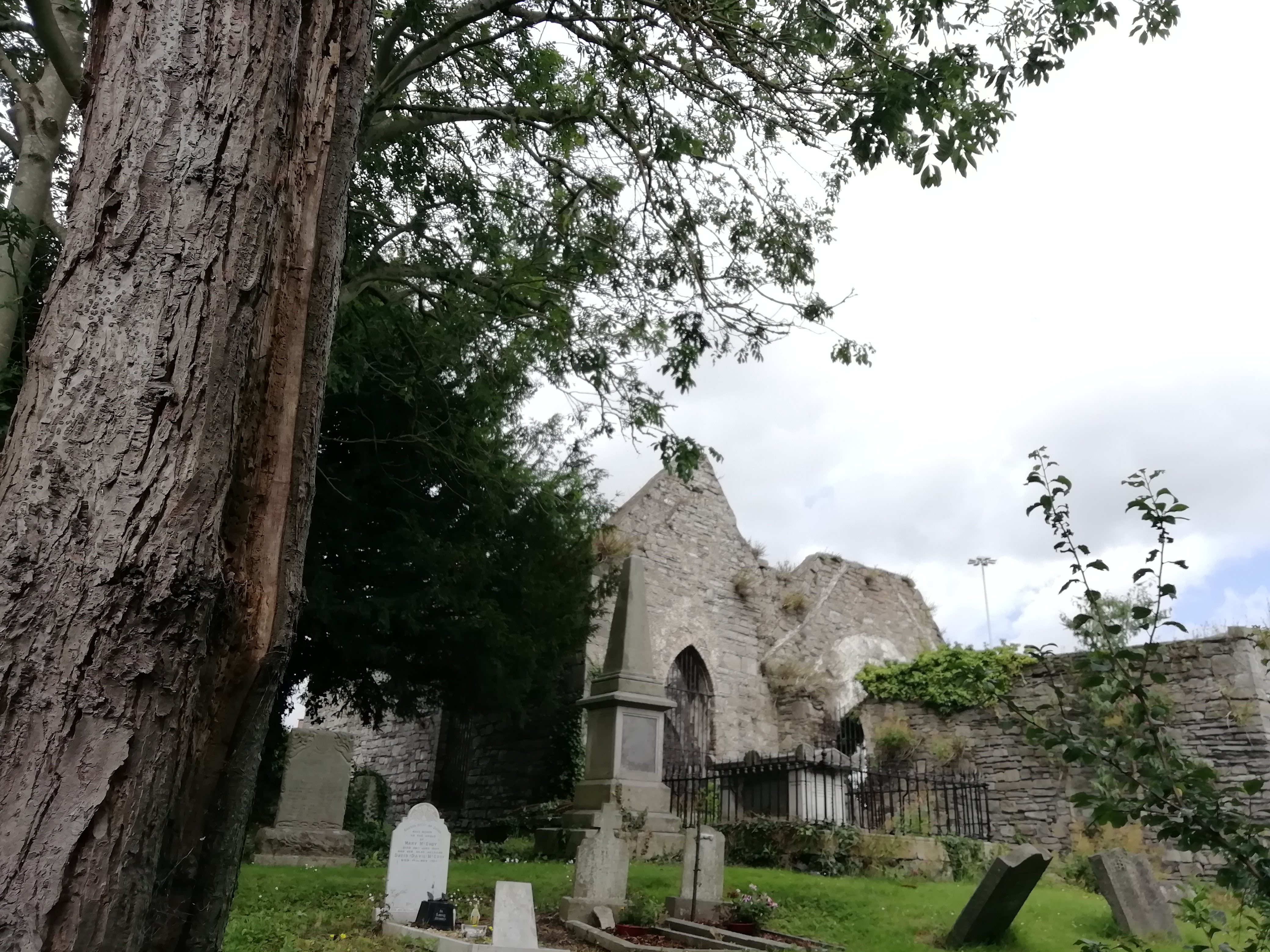
The Church of Saint Canice and the Nethercross in Finglas are one such reminder.


The Nethercross is located in the medieval Church ruins of Saint Canice in Finglas where it's believed the Saint founded a Monastery which preceded the present Church ruins located on the site.


The High Cross originally stood at a place nearby called Watery Lane but was buried in 1649 to save it from destruction by Cromwellian troops who had arrived in Ireland. 


It remained buried and forgotten for 160 years until a Reverend Robert Walsh determined to find it.
 
He thankfully succeeded and the High Cross is on public display in the Church Graveyard.


The name of the Cross originates from the terms Uppercross and Nethercross (Lowercross). 

These were two Baronies. Nethercross included Finglas, Ballymun and several other civil parishes in north County Dublin.


The High Cross is a large ringed imperforate granite Cross. A Cross in relief is carved onto one face and there are also spiral designs carved onto it. 

While not as elaborately carved as some other Crosses it is nonetheless quite beautiful in its understated simplicity.


It is believed that the original Abbey of Saint Canice here at Finglas was attacked several times by Vikings and had succumbed by the 9th or 10th century to ruination.


In 2004 the grave of a high status Viking woman was uncovered in Finglas village. 

A wooden box, Brooches and an antler comb were among some of the items found at the burial site. 


These are on display at the archaeological museum in Dublin.

There are several interesting family vaults and gravestones in the graveyard at Saint Canice's Church.


The Church ruin, High Cross and graveyard are kept locked. Access can be gained through calling at a nearby Cottage and asking the Keyholder for the key. 


There is a contemporary Celtic Cross memorial to Brigadier Dick McKee, an IRA volunteer who was murdered in Dublin Castle in 1920 in tit for tat reprisal for the assassinations of British agents on Bloody Sunday in Dublin, 1920.


Keep the wheels turning.


Sunday, 17 July 2022

Waterstown High Cross, Carlow

 Waterstown High Cross

Waterstone High Cross

There's a wonderfully quiet and secluded Hillock at Waterstown in Carlow which is a delight to visit. Although actually right beside a small road if feels like taking a step back in time.

Waterstone High Cross 

It's hard to explain but I found it very atmospheric, almost ephemeral as if it would soon vanish in the occasional mists.

Waterstone High Cross

On this innocuous hilly mound are to be found two beautiful Crosses. 

One an imperforate/solid wheeled High Cross and the other a later medieval Cross with damaged arms and a crucifixion scene carved on Limestone in mid relief.

Waterstone High Cross

The entrance to the Crosses is marked by two small granite posts in a roadside hedge. 

I always seem to find particular enjoyment in visiting a site where there is no carpark, Visitor Centre or signage. Places like this exude a unique charm and aura of their own.

Waterstone High Cross

They are often quite peaceful and tranquil while appearing like the title of a Tom Hardy book "far from the madding crowd". 

It seems they provide moments of sanctuary or respite however fleeting from modernity and the hustle and bustle of every day modern life.

Waterstone High Cross

There are other antiquities located both here and nearby which I didn't realise at the time of my visit.

Waterstone High Cross

 They include Saint Patrick's Well across a field, an Ogham Stone a few fields away (is a field even a recognised unit of measure) a holed stone on the hillock itself somewhere which I never saw (and which Irish Stones describes as a broken cut marked Bullaun Stone) and the base of a Cross literally 100 meters away on the roadside junction which is used as a Shrine and which I also completely missed.

Waterstone High Cross

The roadside Cross base is most likely the original base of the Cross on the hillock at Waterstown itself.

Waterstone High Cross

Interestingly enough OSI 1800's historic mapping shows the nearby junction where the Cross Base is used as a Shrine as Cloghaphuill which can be interpreted as "the holed stone".

Waterstone High Cross

 It also shows a Church and Graveyard now disappeared which were once located here by the Hillock.

OSI Historic Mapping - Waterstown

This somewhat esoteric and remote site  was apparently at some stage in the not too distant past a reasonably well frequented ecclesiastical settlement of local importance.

Waterstone High Cross

It was somewhat overcast with unusual lighting conditions under the thickets of wild brambles, nettles and shrubbery. 

My efforts at photography reflect my less than perfect skills rather than expressing the beauty of the location itself as I had intended.

Waterstone High Cross

Do take the time to visit Waterstown if you happen to ever be in the area and keep the wheels turning.

Waterstone High Cross

Coordinates here :

52°53'18.8"N 6°40'47.1"W

52.888545 - 6.679760

Library Ireland/S. Lewis/Topographical Dictionary Of Irl/Rathvilly


Waterstone High Cross

And just a short mention to say that if you throw a stone hard enough from here either North or North-West it will land in Wicklow. You are right on the Wicklow/Carlow border at Waterstown.

Waterstone High Cross

Waterstone High Cross

Waterstone High Cross

Waterstone High Cross

Waterstone High Cross

Waterstone High Cross

Waterstone High Cross

Below are just a few streestscape photographs from nearby Rathvilly.

Waterstone High Cross

Waterstone High Cross

Waterstone High Cross


Friday, 15 July 2022

Knocktopher, Kilkenny

Knocktopher 


Knocktopher, in Irish Cnoc an Tóchair, meaning the Hill of the Causeway, is a small village in County Kilkenny.

I didn't mean to end up travelling through the village but I'm glad I did. There's quite a few things to see in the village and nearby too.

The first thing of note nearby is the Ballyboodan (Kilcurl) Ogham Stone. 

Ogham stones come in all shapes and sizes although this one is unusual for its large size and almost geometrically precise rectangular shape.

Ballyboodan Ogham

The Ogham alphabet is a 20 letter old Irish alphabet consisting of groups of linear slash marks also known as the Tree alphabet.

It is believed to have originated c. 350 or thereabouts. It is about 2 Kilometres southwest of Knocktopher and well worth taking a detour to see.

Ballyboodan Ogham

In the village itself Knocktopher Abbey is not in actual fact an Abbey but a mid 1800's house built alongside part of an existing Castle and converted to Lodges. Accommodation can be rented here. I had at first glance mistaken it for an actual Abbey.

I hadn't intended to visit Knocktopher but I passed through as I was heading for nearby Aghaviller ruins and the Round Tower pictured below. It is located roughly 6 Kms away from Knocktopher. 

Aghaviller Round Tower, Kilkenny

A Mass Rock which is a relic from the days of the Penal Laws in Ireland is to be found located mounted on a plinth in at the grounds of the Roman Catholic/Carmelite Friary in the village. 

The Penal Laws were punitive measuress designed to restrict open worship of the Catholic faith and facilitate conversions. I believe the Carmelites had to leave the area c. 2017 due to diminishing numbers in the Order.

There is an interesting looking 1800's Board of First Fruit Church in the village as well but the gates were locked when I visited.

Carmelite Mass Rock, Knocktopher

Carmelite Mass Rock, Knocktopher

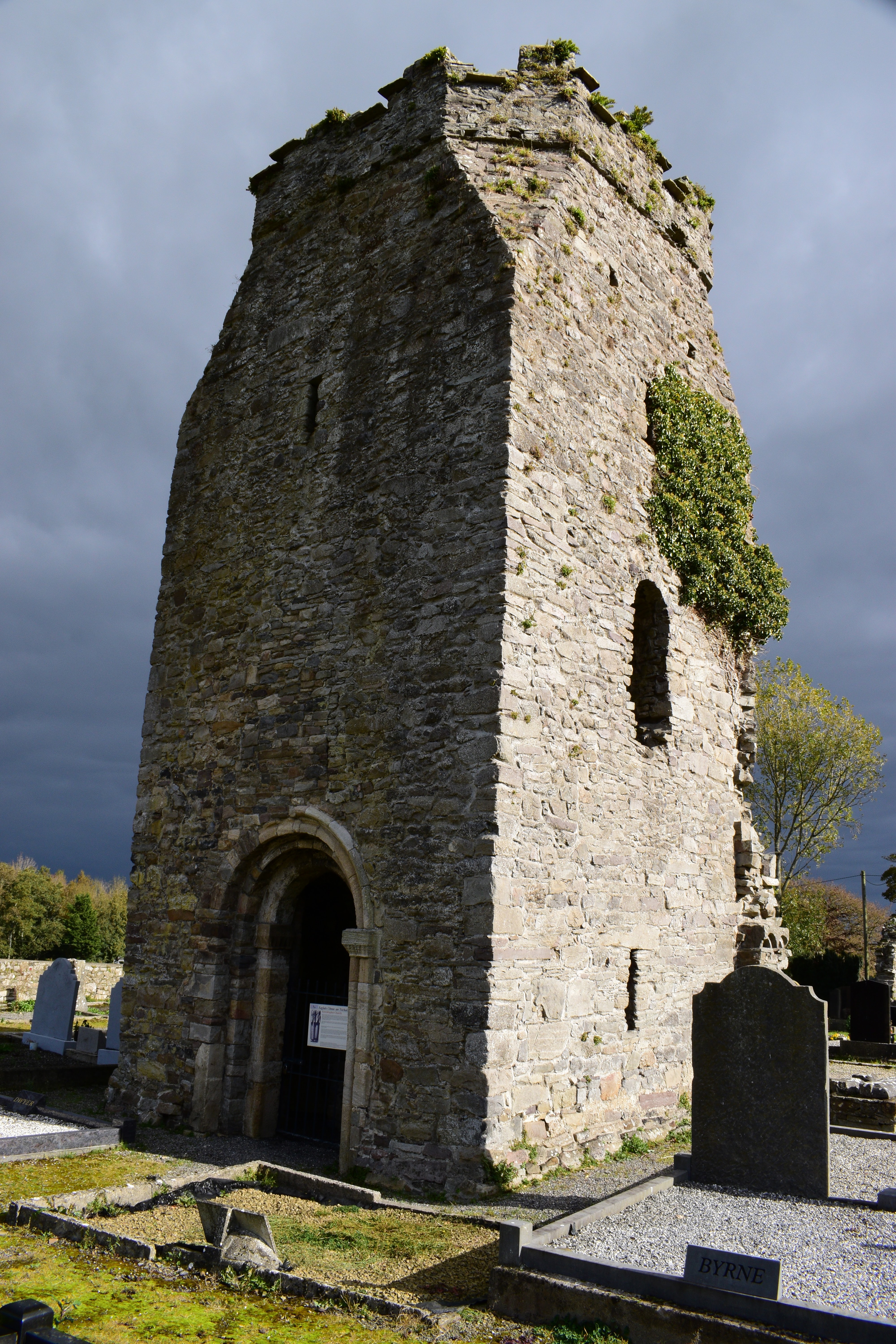
The beautiful west Tower of a 12th century Church is also located in the village. The main Church structure appears to have been demolished in the 1800's according to an on site information board and the Tower is all that remains of the early Church.

Knocktopher Early Church Ruins

There is a delightful Romanesque style doorway into the Tower. Inside is an effigy slab of a male and female figure believed to date to the 15th century.

Knocktopher HIstory/ Romanesque Doorway

Dotted about the graveyard are several Armorial plaques and lots of points of interest. I was pleasantly surprised by all the things to see here.

Knocktopher Early Church Ruins

Also in the Tower but locked safely behind gates are several fragmentary remains, a Cross, a possible  Wayside Cross or Cross slab/Grave marker and some carved figures, all quite interesting.

Knocktopher HIstory

All in all I was delighted to have accidentally stumbled into Knocktopher. It is a little hidden Gem in Kilkenny.

Knocktopher Early Church Ruins

There's lots to see here and a wander around the Graveyard is to be recommended. Earlier fragmentary remains from the Church are dotted here and there and all is contained in a small compact and easily accessible area.

Knocktopher HIstory

I hope you enjoy your visit as much as I did if you take the time to journey to Knocktopher in County Kilkenny.

Knocktopher Early Church Ruins


Knocktopher Early Church Ruins

Keep the wheels turning....

Knocktopher HIstory


Knocktopher HIstory

Knocktopher HIstory

Knocktopher HIstory

Knocktopher HIstory/ Romanesque Doorway

Knocktopher Early Church Ruins


Friday, 1 July 2022

Gortnaglogh Standing Stone, Laois

Just a quick post here today to post a few photographs of Gortnaglogh Standing Stone in Laois.

Gortnaglogh Standing Stone in County Laois.

It's believed this stone was also known as the Mass Stone.

Gortnaglogh Standing Stone in County Laois.

It's further presumed that Mass was held here during the times of the repressive Penal Laws when open Catholic worship was banned and priests were often hunted down and murdered for ministering to their flocks.

Gortnaglogh Standing Stone in County Laois.

The photographs were taken on a misty rainy day and it was hard to get a decent shot.

Standing Stones in Laois

Keep the wheels turning.........